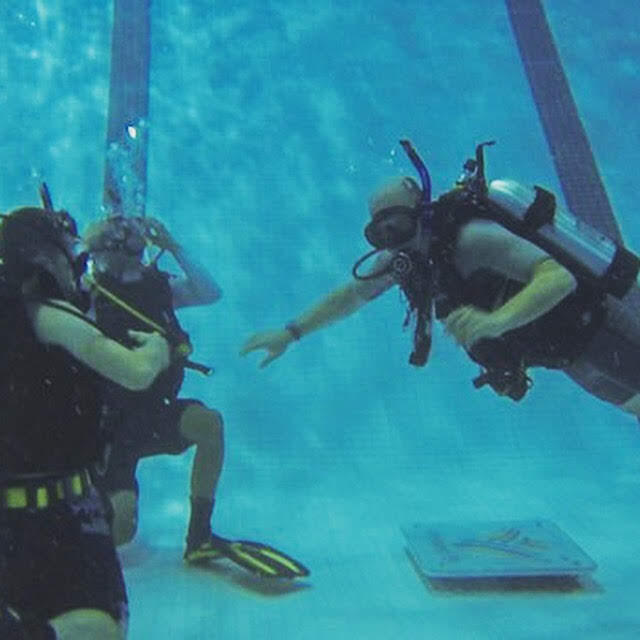
Open Water Scuba Diver
Ready to breathe underwater and explore a whole new world? The Scuba Educators International (SEI) Open Water Scuba Diver Course is your first step into adventure. From your very first breath beneath the surface to your first open water dives, you’ll gain the skills, confidence, and knowledge to dive safely anywhere in the world. Learn how to control your buoyancy, communicate underwater, and move effortlessly through the water—all while experiencing the thrill of weightlessness. By the end of the course, you won’t just be trained—you’ll be certified and ready to dive into a lifetime of unforgettable experiences.
Availability: In Stock
Open Water Scuba Diver
TRAINING OBJECTIVES
By the end of this course, the successful student will be able to demonstrate the ability to plan and safely execute entry-level recreational dives. The successful candidate will also be able to demonstrate proficiency in entry-level diving knowledge by passing the final written examination.
PREREQUISITES
• Age. Minimum is 15 years by the water phase of the course. (Junior certification for ages 12-14 years is allowed).
• Certification/Experience/Knowledge. There is no certification required to enter this course.
POLICIES
• Daily Hours. No more than eight hours of training shall be conducted during any one day.
• Academics (estimated hours). 14 hours.
• Practical Application.
- MINIMUM REQUIRED HOURS.
- 17 hours including at least 10 water hours.
- MINIMUM REQUIRED DIVES.
- The minimum number of open water dives is four.
REQUIREMENTS – ACADEMIC
• Applied Sciences. Physics, physiology and medical aspects as they relate to a diver’s performance and safety in the water. Emphasis is to be placed on physical fitness, diving hazards, personal limitation, and the behavior needed to minimize the risks of diving. Material is to be presented in terms of qualitative, practical application. Topics include: gases, pressure, volume, temperature, density, buoyancy, vision, and acoustics. Also, to be included are the definition, cause, prevention, symptoms, and first aid for nitrogen narcosis, shallow water blackout, squeezes, overexertion, overexposure, decompression illness, i.e., decompression sickness, and air embolism, and related injuries. Repetitive dive tables are to be covered to the extent required for students to be able to plan repetitive dives not requiring staged decompression. It is acceptable for students to be instructed in the use of their personally owned dive computers in lieu of using dive tables for dive planning.
• Diving Equipment. Purpose, features, types and uses of recreational skin and scuba equipment. The student is to be able to select, use, and care for mask, snorkel, fins, BC with low pressure inflator, weight system and weights, scuba cylinder, regulator with submersible pressure gauge and alternate air source, depth gauge, timing device, dive computer, protective suit, knife, compass, surface marker buoys (delayed or permanent), and any other basic equipment dictated by the local diving conditions.
• Diving Safety. Aspects that impact upon a diver’s safety. Topics are to include emergency procedures, rescue and first aid as applied to diving, underwater communications, basic underwater navigation, dive planning, and safety measures. Shock, wounds, envenomation, and near-drowning are to be covered under first aid. Rescue is to address problem prevention and recognition, panic, self-rescue assists and transports, retrievals from depth, and rescues in open water.
• Diving Environment. Physical and biological aspects of the environment where open water training is conducted. The student shall be trained to recognize potential hazards before entering the water. The instructor is to nurture student awareness of the importance of conservation and the kinds of both negative and positive impact divers can have on the environment. Game regulations, conservation principles, and other pertinent laws are to be addressed where appropriate.
• Diving Activities. The how, who, when, where, what, and why of diving. Emphasis shall be placed upon continued education through SEI training courses. Information on the availability of dive clubs, boats, stores, dive locations, books and periodicals, and a limited introduction to specific diving activities shall be given.
• Continuing Education. Limitations as new divers and the importance of additional training. An awareness of personal ability shall be emphasized. Specific information on continuing education courses, workshops, and conferences is to be provided. The importance of logbook use shall be emphasized. Students are to appreciate the need to reevaluate their physical condition and diving competence before resuming open water diving after periods of inactivity or prior to embarking on dives beyond their current level of training. Use of the SEI Refresher Scuba Experience or more advanced level SEI training is to be recommended in such cases.
REQUIREMENTS – SKILLS
• Dry Suit Use. If dry suits are to be used, the student must complete the following skills in confined water before participating in open water activities:
- Demonstrate the use of suit controls.
- Recover from an inverted position while buoyant.
- Recover from simulated stuck suit valves.
- Demonstrate a procedure to compensate for a jettisoned weight system.
- Select a compatible buoyancy compensator.
- Maintain a minimum volume of air in the suit to prevent suit squeeze.
• Swimming Skills (confined or open water)- no equipment.
- 200 meter (200 yard) surface swim, without stopping, using any stroke or combination of strokes. .
- 10-minute treading water and/or survival float with no additional flotation devices. (e.g. life jacket, buoyancy compensator, or similar.)
- 8 meter (25 feet) underwater swim without a push off.
- Retrieve a 2.25 kg (5-pound) weight from a minimum depth of 2.4meters (8 feet) but no more than 3.6 meters (12 feet)
• Skin Diving (confined or open water) minimally equipped with mask, fins and snorkel.
- Swim - 100 meters (100 yards) only using kicking, while using fins for propulsion and breathing with a snorkel.
- Student to swim on surface with fins and breathing on snorkel no less than 14 meters (15 yards), do a surface dive, retrieve a 2.25 kg (5-pound) object, return to the surface, clear snorkel, and return to starting point without lifting their head out of the water or stopping.
- Using proper techniques perform water entries and exits, surface dives, surface swimming, clearing the snorkel, ditching the weight system, buoyancy control, underwater swimming and surfacing.
• Scuba Diving (confined and open water). Skills marked with an asterisk “*” must be introduced in confined water. Depth requirements in excess of 2.4m (8 ft.) do not apply in confined water.
PRE- AND POST-DIVE SKILLS.
- *Select, check, assemble, adjust and don equipment; perform pre-dive gear check for self and buddy; defog masks; after diving, doff, rinse, and care for gear.
- *Perform surface buoyancy/weighting check and make adjustments as needed to hover at diving depth.
- Correctly give and recognize surface communications for divers.
- Orally inflate and deflate own and buddy’s BC.
- *At the surface, remove and replace (in turn): mask, fins, and scuba unit.
- *With face submerged, breathe through snorkel while resting and swimming.
- With face submerged, breathe through water in the snorkel without choking.
- *Regulator and snorkel exchange at the surface while swimming
- Release a simulated muscle cramp from self and buddy.
- If appropriate for the area, enter and exit the water with a float and/or, “Diver Down” flag and line; use to identify the dive area while diving.
- Deploy and retrieve a surface marker buoy.
- *Surface removal and replacement of the scuba unit
- *Demonstrate proper use of the selected weight system. As appropriate, on the surface and underwater, skills include: removal and replacement, adjustment, and positioning. Minimally, all weight systems must be removed on the surface at least one time, by the student.
DESCENT/ASCENT SKILLS.
- *Control pressure in air spaces for comfortable, controlled descents and ascents.
- *Descend feet first with a minimum of hand movement, i.e., sculling or treading, using breath control or BC to control rate of descent.
- At the end of a dive, ascend at a controlled steady rate of 9m (30 ft.) or less per minute and hover at a depth of approximately 4.6m (15 ft.) for three minutes.
UNDERWATER SKILLS.
- Give, recognize, and respond appropriately to common underwater communications.
- *Mask clearing, including removal and replacement.
- *Demonstrate no-mask comfort and proficiency
- *Remove, replace, and clear a regulator.
- *Regain primary regulator from behind the shoulder, replace, and clear.
- *Environmentally appropriate buoyancy control
- *Hover without support or significant movement.
- *Underwater swimming with position and trim appropriate to the environment
- * Removal and replacement of the scuba unit
- *If wearing a standard buckle type weight belt and submerged in a prone position at the bottom or while hovering, adjust the position of the weight system so that the ballast is evenly distributed.
- *If wearing a weight-integrated weight system, and submerged in a prone position at the bottom or while hovering, remove and replace at least one weight pocket, if permitted by the weight system. If necessary, assistance is allowed to replace the weight pocket.
- Use the buddy system for scuba diving, remaining within 3m (10 ft.), or less if required by conditions, of buddy.
- Monitor air supply and communicate amount remaining upon request, and manage air supply so as to surface with a pre-planned minimum amount of air.
- Using environmental navigation aids and a compass, travel underwater to a designated location or in a given direction for a set period of time.
- Use an underwater compass to set a bearing: follow the bearing and return on a reciprocal course to the approximate starting location.
• Planning.
- Measure, record, and calculate individual air consumption (as surface air consumption rate) using a submersible pressure gauge, depth gauge and timing device.
- Plan and make a no-required-stop dive to a depth between 12 to 18m (40 to 60 ft.). Planning is to consider at a minimum: adequate breathing gas supply for descent, time at depth, ascent, precautionary stop and safety margin. If local dive areas, i.e. dive locations within a 50-mile (80km) radius of the course facility, do not provide water depths in excess of 12m (40 ft.) or there are other hazards that, in the instructor’s judgment, prevent the completion of a dive that exceeds 12m (40 ft.) a simulated deeper water dive to a lesser depth is acceptable as long as it still meets the definition of a scuba dive as stated in the “Glossary.”
- Upon completion of a dive, use the repetitive dive table to properly calculate a planned no-required-stop repetitive dive projected to begin after at least a one-hour surface interval. It is acceptable for students to be instructed in the use of their personally owned dive computers in lieu of using dive tables for dive planning. (The actual dive need not be conducted.)
• Environmental.
- Dive using skills that have a minimal impact on the environment and promote conservation.
- Recognize and identify (by common name) samples of plant and animal life typically seen.
• Emergency/Rescue/Problem Solving.
- Transport for a distance of at least 46m (50 yards) a buddy who is simulating exhaustion. Eye-to-eye or voice contact between rescuer and diver must be maintained.
- *In a stationary position in confined water and at a minimum depth of 4.6m (15 ft.) in open water, share air in a controlled manner with another diver, be both the donor of air and receiver of air.
- *Perform a relaxed, controlled emergency swimming ascent in confined water and from a minimum depth of 4.6m (15 ft.) in open water.
- *Share air as both a donor and a receiver from an octopus or alternate breathing source (not buddy breathing) during ascents in confined water and from a minimum depth of 4.6m (15 ft.) to the surface in open water.
- *Bring a diver simulating unconsciousness to the surface from a depth of approximately 3m (10 ft.), remove victim’s weight system, mask and snorkel; simulate in-water rescue breathing.
Get Started
Getting started is easy! Individuals ages 12+ and in good physical condition may enroll in a SEI Open Water Scuba Diver course. Signing up for a class is easy, while wetsuits and fun await!
Course Package Includes:
Instructor fee.
eLearning material
Certification card
Pool rental
Air fills
Mask
Snorkel
Fins
Booties
Gloves
Hood
SMB w/Finger Reel
Mask bag
Dive Bag
Defog/Scrub kit
Microfiber Towel
Rental items included in price:
*Buoancy Control Device (BCD)
*Life Support System (1st Stage regulator, 2nd Stage regulator, Alternate Reglator, and Submerssible Pressure Guage (or Computer) at minimum.
*Wetsuit
*Weights
*Cylinder